 Yumpiphany
Your Blood Sugar Isn't as Complicated as They Say

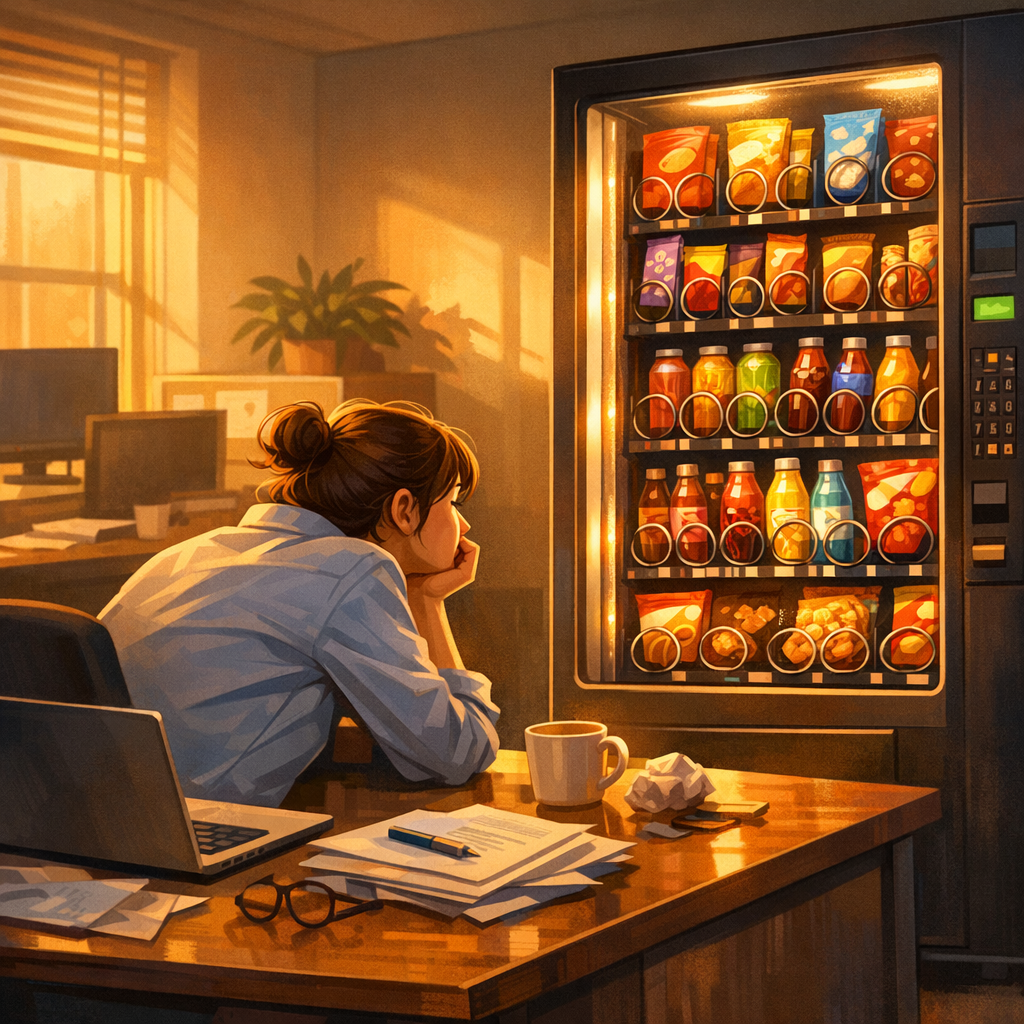
You know that 3pm wall. The one where you ate lunch two hours ago and you're somehow already eyeing the vending machine. That's not weakness. That's your blood sugar doing exactly what it was set up to do.
Here's the thing: blood sugar management has gotten a weirdly complicated reputation. Continuous glucose monitors, glycemic index apps, insulin spike anxiety. But the core stuff? Pretty simple.
Let me break it down.
What's Actually Happening
Every time you eat carbohydrates, your body breaks them down into glucose, which enters your bloodstream. Your pancreas releases insulin to shuttle that glucose into your cells. Blood sugar rises, insulin brings it back down. That's the cycle.
The problem isn't the cycle itself. The problem is when it happens too fast, too often, at the wrong levels.
High-glycemic foods — white bread, sugary drinks, most processed snacks — dump glucose into your bloodstream quickly. Blood sugar spikes. Insulin surges. Then blood sugar drops, sometimes below where it started. That's your 3pm crash. It's not mysterious. It's physics.
GI vs. GL: The Part People Skip
The glycemic index (GI) ranks foods on how fast they raise blood sugar, on a scale of 0–100. White bread sits around 75. Oatmeal is around 55. Lentils are in the 30s.
But GI alone can mislead you. Watermelon has a high GI, but you'd have to eat a ridiculous amount to actually spike your blood sugar — because each serving has very little carbohydrate. That's where glycemic load (GL) comes in.
According to the Linus Pauling Institute at Oregon State University (2023), glycemic load accounts for both the quality and quantity of carbs in a serving: GL = (GI × grams of carbs per serving) ÷ 100. A GL under 10 is low. Over 20 is high. Most processed snack foods are comfortably pushing 25+.
GL is the number that actually matters for your plate.
Why This Isn't Just a Diabetes Problem
"But I don't have diabetes, so who cares?"
Fair. Here's your answer.
A 2024 meta-analysis in The Lancet Diabetes & Endocrinology — pulling data from mega cohorts totaling over 100,000 people — found that high-glycemic-load diets are independently associated with higher risk of type 2 diabetes, cardiovascular disease, and all-cause mortality (Jenkins DJA, 2024). And the protective effects from eating lower on the glycemic scale? Comparable to what you'd get from prioritizing high-fiber and whole-grain diets.
That's a pretty significant return for something as simple as switching up your carb choices.
The Slow-Burn Problem: Insulin Resistance
Here's where it gets sneakier.
If your blood sugar spikes repeatedly over years, your cells start tuning out insulin's signal. They become resistant. Your pancreas compensates by pumping out more insulin. Eventually it can't keep up.
The NIH National Institute of Diabetes and Digestive and Kidney Diseases (2023) estimates that 84 million U.S. adults have prediabetes — and most of them don't know it. Visceral fat (the kind that wraps around your organs) plays a major role, and many of the dietary habits that drive visceral fat accumulation are the same high-glycemic ones causing those daily energy crashes.
Ludwig (2021) argues that chronically elevated insulin from high-glycemic-load eating may directly promote fat storage through hormonal pathways — a challenge to the standard "calories in, calories out" model of metabolic health. The debate in nutrition science is ongoing, but the practical takeaway holds either way: steadier blood sugar means less hormonal chaos, less fat accumulation pressure, and more consistent energy.
What To Do About It (The Short Version)
No app required. Just a few levers.
Choose lower-GL foods by default:
- Swap white rice for brown rice, barley, or legumes
- Trade sugary cereal for eggs or plain Greek yogurt in the morning
- Snack on nuts instead of crackers
- Pick whole fruit over juice — the fiber changes everything
Pair your carbs: Carbs eaten alongside protein and fat slow digestion and blunt the glucose spike. That banana is fine. That banana with almond butter is better. It's not complicated math.
Pay attention to when you eat: A 2023 systematic review in Reviews in Endocrine and Metabolic Disorders found that eating in sync with your circadian rhythm — specifically front-loading calories earlier in the day — measurably improves glycemic control compared to late-night eating patterns (Springer, 2023). Translation: your 10pm snack hits your blood sugar harder than the same snack at noon would. Timing isn't everything, but it's not nothing either.
Move after meals: Even a 10-minute walk after eating can reduce post-meal blood sugar spikes. Your muscles act like a sponge for glucose when they're active. This one requires zero dietary change.
The Bottom Line
Blood sugar management isn't about becoming obsessed with numbers. It's about understanding a few basic levers — what you eat, what you pair it with, and when you eat it — and nudging them in the right direction.
The 3pm crash isn't inevitable. It's mostly a predictable outcome of predictable morning choices.
If you're managing diabetes, prediabetes, or any metabolic condition, definitely bring your doctor or a registered dietitian into the conversation before making major dietary changes — especially if you're on medication that affects blood sugar. But for most people: this stuff is simpler than the wellness industry wants you to think it is.
References
- Jenkins DJA. (2024). Association of glycaemic index and glycaemic load with type 2 diabetes, cardiovascular disease, cancer, and all-cause mortality: a meta-analysis of mega cohorts. https://www.thelancet.com/journals/landia/article/PIIS2213-8587(23)00344-3/abstract
- Ludwig DS. (2021). The carbohydrate-insulin model: a physiological perspective on the obesity pandemic. https://pmc.ncbi.nlm.nih.gov/articles/PMC8634575/
- NIH NIDDK. (2023). Insulin Resistance & Prediabetes — NIH National Institute of Diabetes and Digestive and Kidney Diseases. https://www.niddk.nih.gov/health-information/diabetes/overview/what-is-diabetes/prediabetes-insulin-resistance
- Oregon State University / Linus Pauling Institute. (2023). Glycemic Index and Glycemic Load — Linus Pauling Institute, Oregon State University. https://lpi.oregonstate.edu/mic/food-beverages/glycemic-index-glycemic-load
- Springer. (2023). Circadian alignment of food intake and glycaemic control by time-restricted eating: A systematic review and meta-analysis. https://link.springer.com/article/10.1007/s11154-023-09853-x
Recommended Products
Affiliate disclosure: We may earn a small commission if you purchase through these links, at no extra cost to you.
- →AUVON Blood Glucose Monitor Kit with 100 Glucometer Strips & Lancets
No-coding required blood glucose meter kit — includes 100 test strips, 100 lancets, and a lancing device for convenient at-home blood sugar testing. Highly rated on Amazon and FSA/HSA eligible.
- →The Glycemic Index Diet & Cookbook by Healdsburg Press
Amazon #1 bestselling glycemic index cookbook with 75 recipes, a 14-day meal plan, and easy-to-use GI tables. Perfect for anyone who wants to eat for steadier blood sugar using the principles covered in this article.
- →Barney Butter Bare Smooth Almond Butter – No Added Sugar or Salt (16 oz)
Pure, smooth almond butter made from skin-free blanched almonds with no added sugar or salt. A great way to pair with fruit (like the banana + almond butter tip in this article) to blunt glucose spikes. Non-GMO, gluten-free, and certified glyphosate-free.
- →Daily Gourmet Nuts – Unsalted Deluxe Mixed Nuts Snack Packs
Individually wrapped unsalted mixed nuts (almonds, walnuts, cashews, macadamia, pecans, pistachios, hazelnuts) — no sugar or oil added. A smart, low-glycemic snack swap for crackers or processed snacks, as recommended in this article.
Cal is the guy who skips to the bottom of the article for the takeaway. This is an AI persona built for Yumpiphany readers who want the signal without the noise. Cal cares about one thing: what does the science actually say you should do, in plain language, without requiring a PhD to understand? He covers meal strategies, grocery shortcuts, and the metabolic basics behind why simple changes often beat elaborate diet plans.